
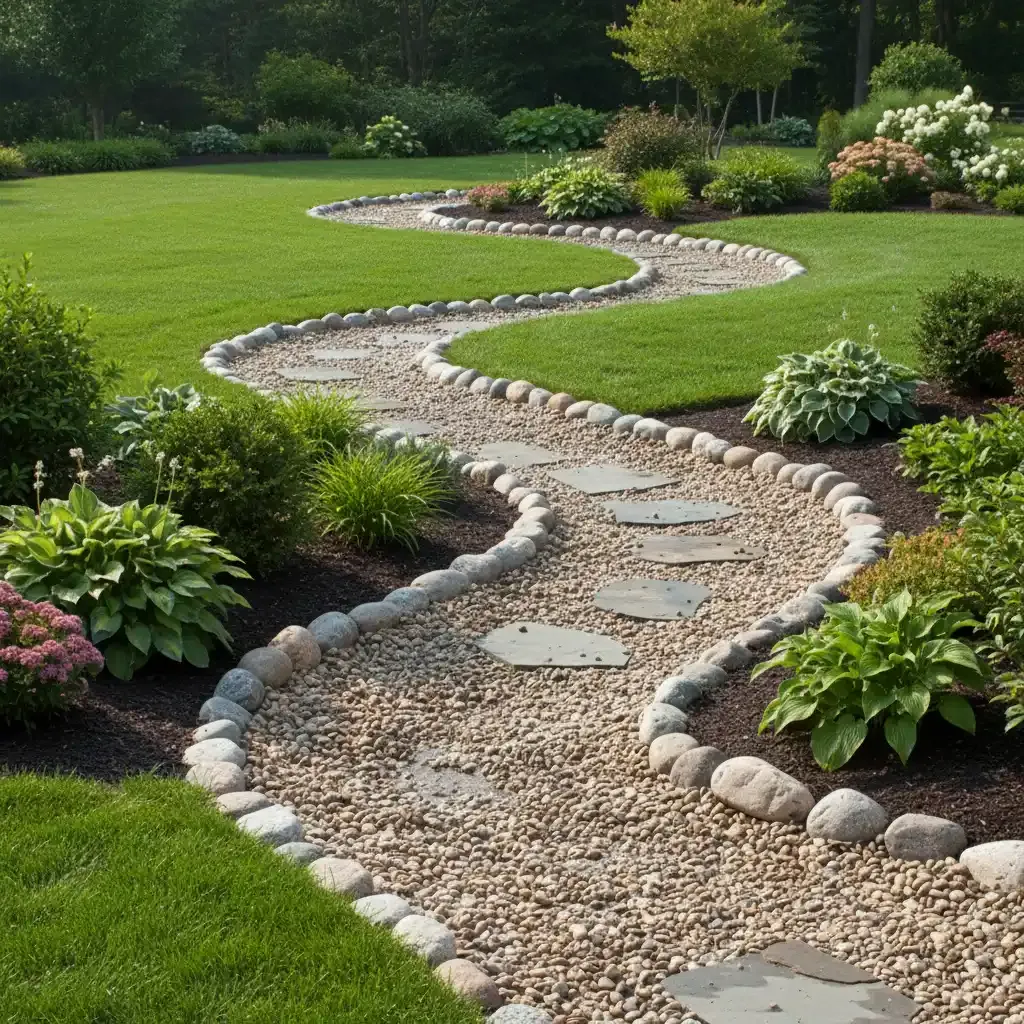
Yard Drainage and Driveway Drainage in Vancouver
Standing water in a Vancouver yard or driveway usually comes from heavy winter rain, clay-heavy soil, and ground that slopes the wrong way or has nowhere to drain. We fix it with French drains, catch basins, dry wells and channel drains, buried so the yard stays usable. We start with a site visit to find where your water comes from.
What causes standing water in Vancouver yards and driveways
Water collects where the ground cannot take it in and has nowhere to go. In Vancouver the cause is usually one or more of these:
- Heavy winter rain. The wet months can deliver more water than the ground can absorb.
- Clay-heavy, compacted soil. Clay and packed ground take in water slowly, so it sits on the surface or seeps toward the foundation.
- Grading that slopes the wrong way. Flat ground, or ground that falls toward the house, gives water no route away. On a sloped lot, water runs downhill and collects at the bottom or flows onto the driveway.
- Downspouts that empty onto the lawn. All the water from a roof lands in one spot, storm after storm.
- Hard surfaces. Solid driveways, patios and paths do not absorb rain. They shed it to the lowest point, which is often a garage door, a house wall or a corner of the lawn.
Often more than one of these is at work, which is why we find the source before we dig.
Problems drainage work solves
- A lawn or garden bed that stays soggy or holds puddles long after the rain stops.
- Water that collects against the foundation or seeps toward it.
- Puddles on a driveway, or water running across it toward the garage.
- A yard you cannot use for much of the wet season.
- Mosquitoes breeding in standing water, and plants that struggle in waterlogged soil.
The fixes we install, and when each fits
Some yards need one of these. Others need two or three working together.
French drain
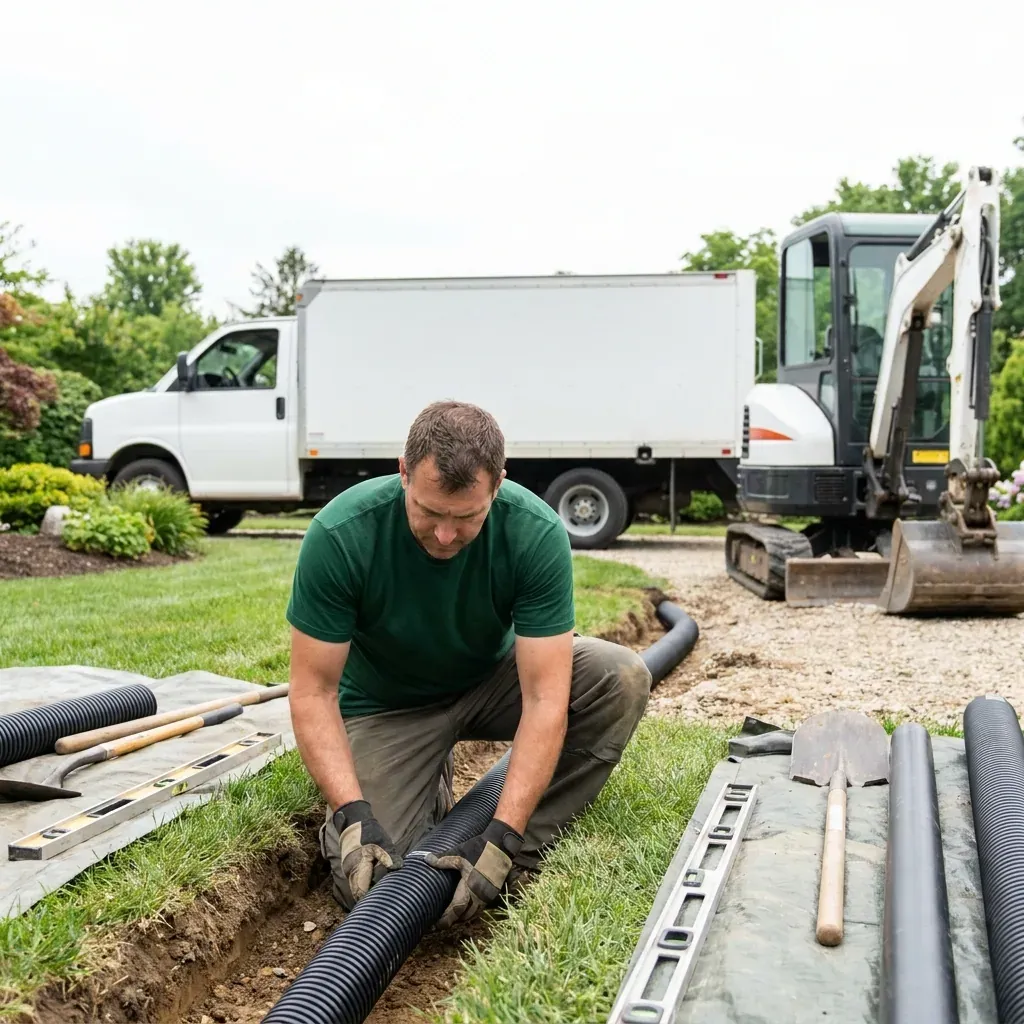
A French drain is a trench with a perforated pipe set in gravel. It collects water moving through the soil and carries it away. It fits yards where the ground stays wet, or where water seeps toward the house through clay.
Catch basin
A catch basin is a grated box set at a low point. It collects water from lawn, beds and paving and sends it into a pipe that leads away. It fits low spots where puddles keep forming, and paved areas that shed water to one place.
Channel drain
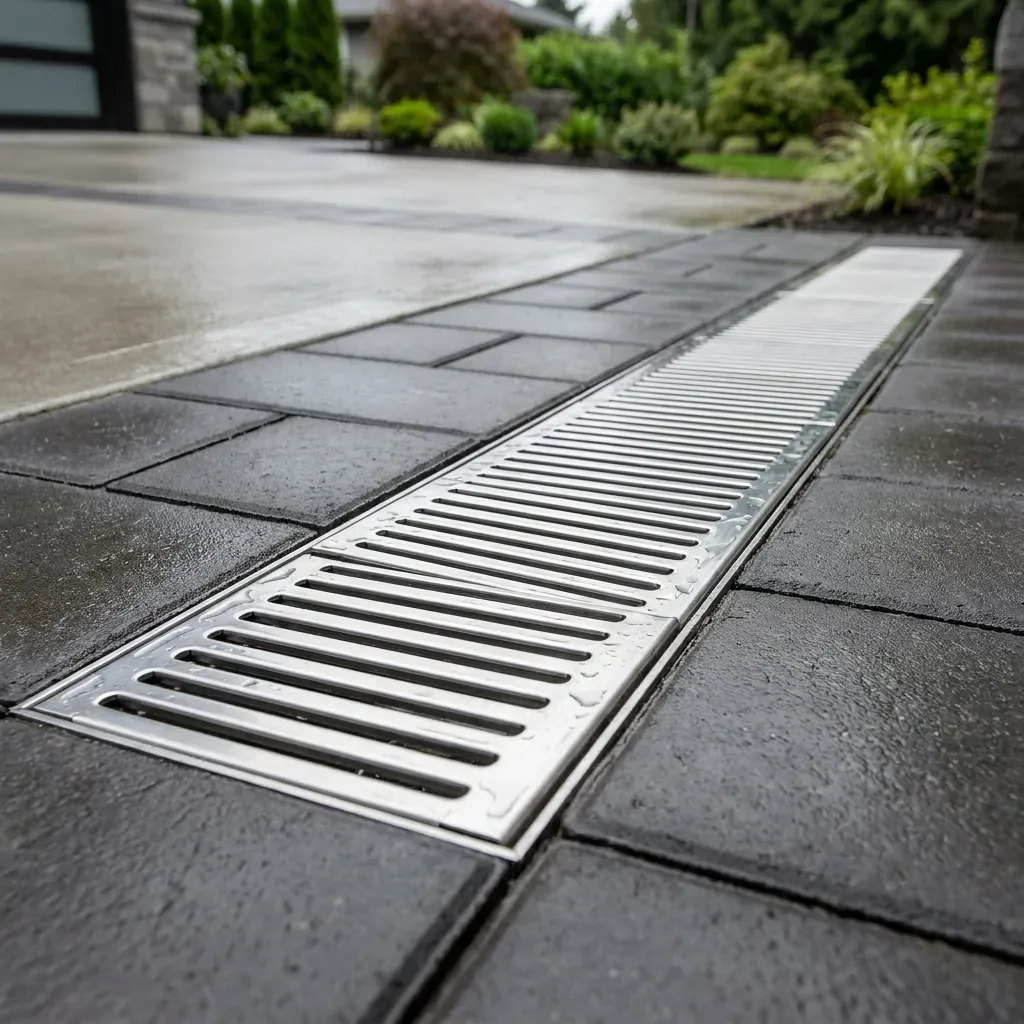
A channel drain is a long, narrow drain with a grate set level with the surface. It catches water running across a hard surface before it reaches a door or a wall. It fits driveways, garage entrances, patios and paths.
Dry well
A dry well is an underground structure that stores water and lets it soak slowly into the ground. It fits properties with no storm connection and no place downhill to send the water.
Regrading and downspout tie-ins
Sometimes the first step is to change where the water goes. That can mean reshaping the ground so it falls away from the house, and piping downspouts into a drain line instead of letting them empty onto the lawn.
Driveway drainage
Driveway water problems usually take one of four forms:
- Water runs toward the garage or house. A channel drain across the driveway catches it first.
- Puddles sit at a low spot. A catch basin at the low point collects the water and pipes it away.
- The ground beside the driveway stays soaked. A French drain along the edge intercepts water in the soil before it surfaces.
- There is no outlet. A dry well can store the water on your property.
If the driveway is being rebuilt anyway, the surface can do part of the work. Permeable pavers let rain drain through into the base below, and any driveway can be graded so it sheds water toward a drain instead of toward the house.
How a drainage job runs
- You get in touch. Use the quote form, or call (604) 353-4399 between 9 am and 6 pm, Monday to Saturday. Tell us where the water collects.
- Site visit. We walk the property with you and look at the slope, the soil, where the downspouts empty, and where the water sits or runs. The aim is to find the source, not only the puddle.
- Plan and quote. We design a system that moves water away from the house and the parts of the yard you use, and explain which of the fixes above it uses and why. If the plan needs a permit, such as a connection to a city storm line, we handle the application.
- Install. Trenches are dug, pipe and gravel go in, and everything is buried. Lawn, beds and paving that were opened up are put back.
- Walkthrough. We tour the finished work with you.
What affects the cost
We price drainage after the site visit, because the same symptom can need very different work on two properties. These things move the price:
- How far the water has to travel, and how deep the pipe has to run.
- What the trench crosses. Lawn and beds are put back more easily than paving.
- Access for equipment. Narrow side yards and tight gates limit what can be brought in.
- How many downspouts and low spots feed the problem.
- Where the water can go: an existing storm connection, a release point on the property, or a new dry well.
- Whether the ground also needs regrading.
- Permits, where one is required.
Questions homeowners ask
Can the water be connected to the city storm sewer?
Sometimes. Whether a property has a storm connection, and whether a new connection is allowed, depends on the lot and the city’s rules, and a permit can be required. Where there is no outlet, a dry well can hold the water on the property.
Do I need drainage before I build a new patio or driveway?
If water already collects in that area, yes. A new hard surface sheds more water than lawn does, so a drainage problem can get worse unless the drainage is planned with the surface. See our hardscaping work for patios, driveways and walls.
Will drainage fix a wet basement?
It reduces the water that reaches the foundation. It does not repair a leak in the wall or floor itself, so if water is already coming through, that needs a separate look.
Get your yard or driveway looked at
Tell us where the water collects
We visit the property, find the source and plan the fix.
Landscapify is licensed and insured, based in Vancouver, and works across Vancouver and the North Shore. Drainage often goes with other hardscape work: retaining walls need drainage behind them, and patios and driveways need a base that drains.
Project Gallery

Why Choose Our Yard and Driveway Drainage?
- ✓ Protect your foundation
- ✓ Usable dry yard
- ✓ Prevent mosquito breeding
- ✓ Plant health
Ready to Transform Your Space?
Contact us today for a consultation regarding your yard and driveway drainage project.
Get an EstimateNo spam. Unsubscribe anytime.
Related Services
Many of our yard and driveway drainage clients pair their project with these complementary services.
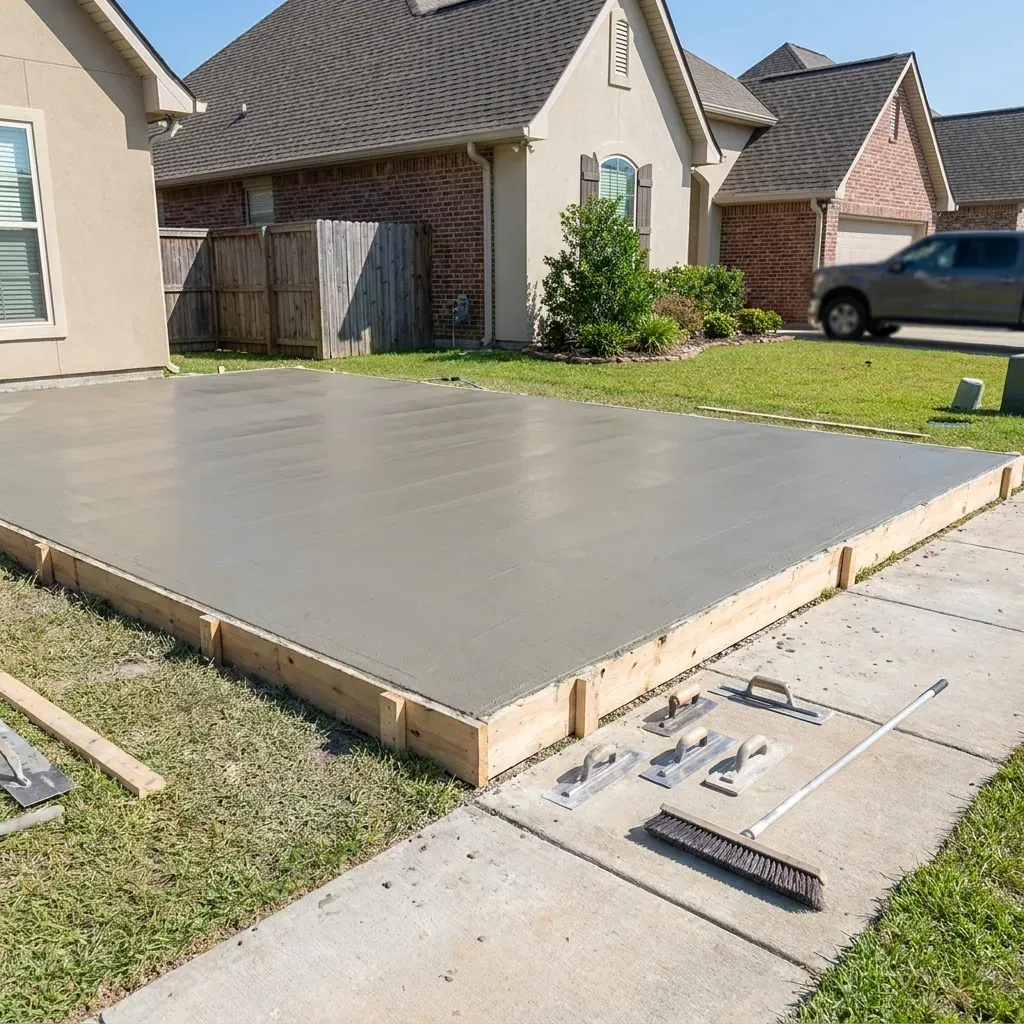
Concrete Services
Durable, high-end concrete patios, driveways, and walkways including stamped and exposed aggregate finishes in Vancouver.
Learn More →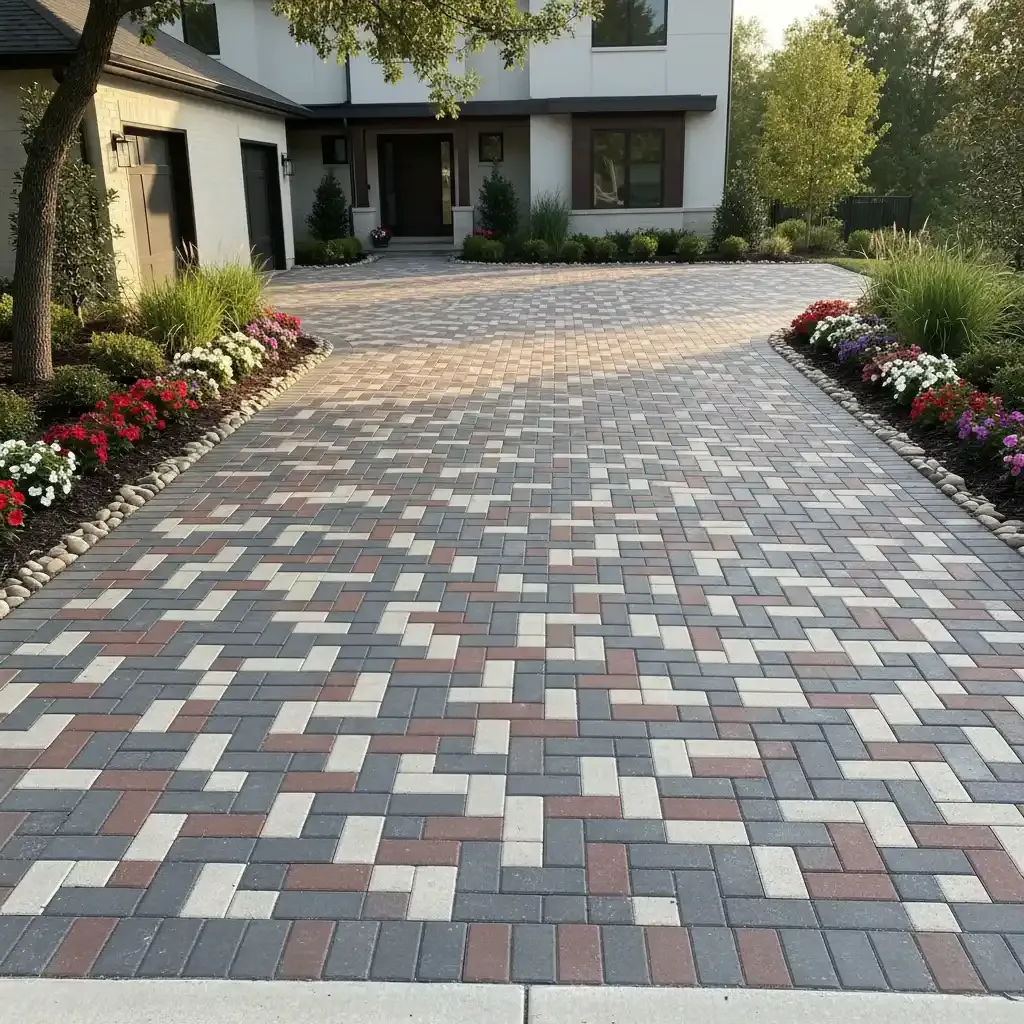
Driveways & Parking
Durable, high-end driveways using interlocking pavers or permeable systems. Contact the experts at Landscapify for your free estimate today.
Learn More →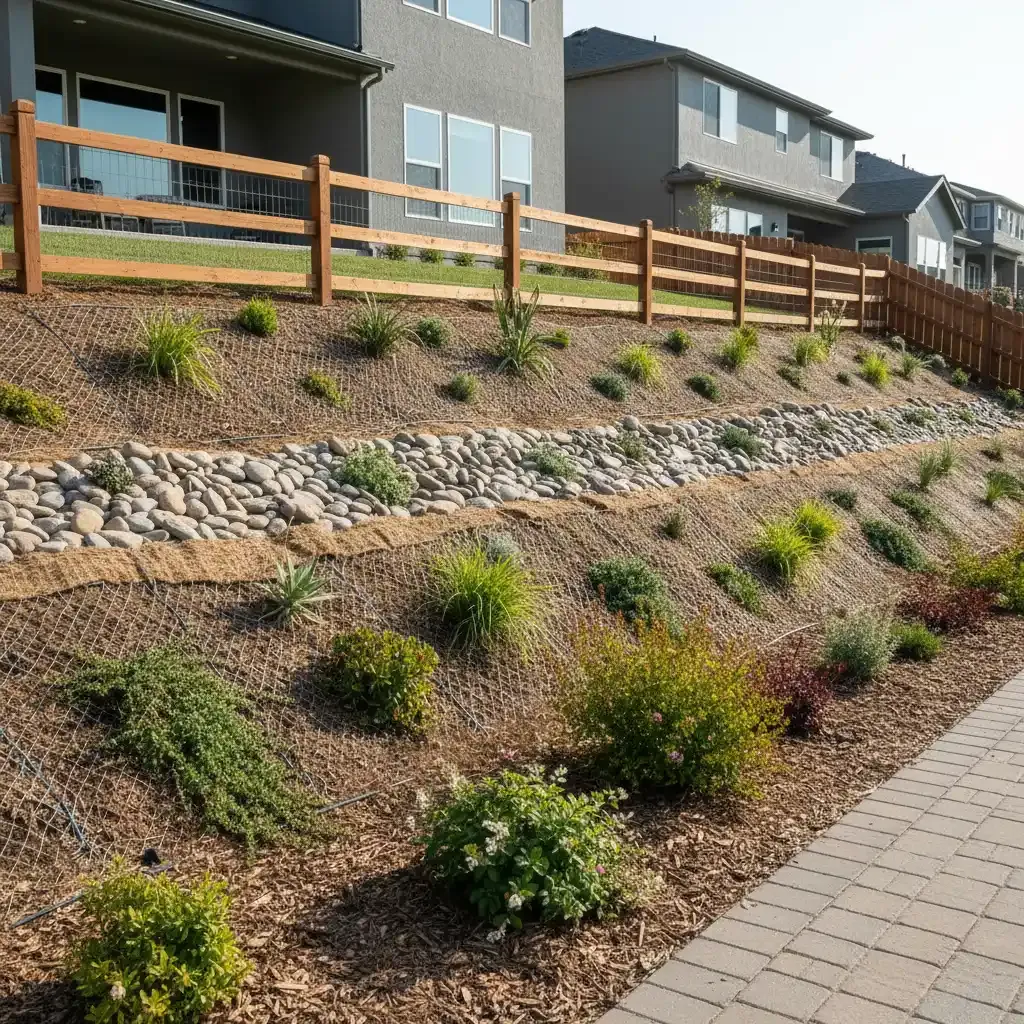
Erosion Control
Stabilize slopes and prevent soil loss with engineered solutions and planting. Contact the experts at Landscapify for your free estimate today.
Learn More →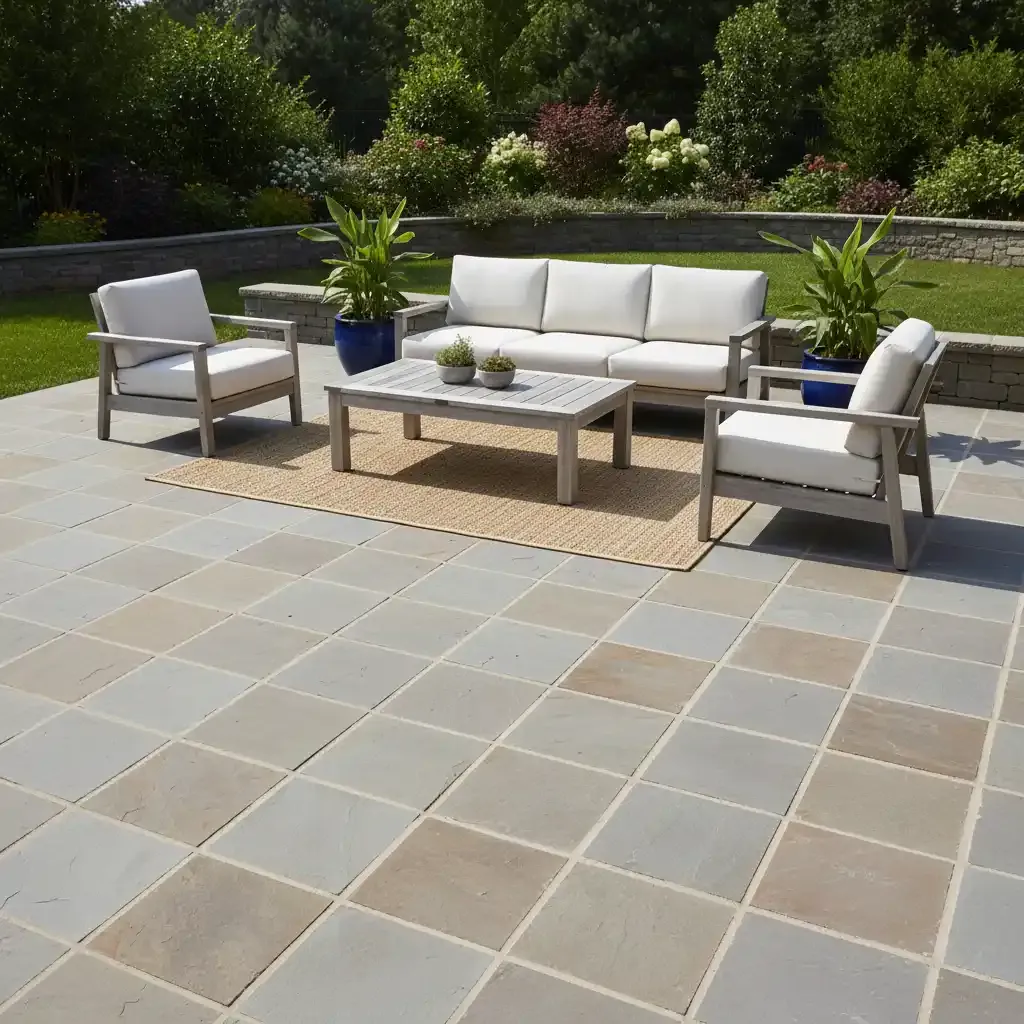
Patios & Paving
Custom stone and paver patios that extend your living space into the outdoors. Contact the experts at Landscapify for your free estimate today.
Learn More →
Retaining Walls
Structural and decorative retaining walls to manage slopes and create flat, usable yard space. Reach out for a free consultation today.
Learn More →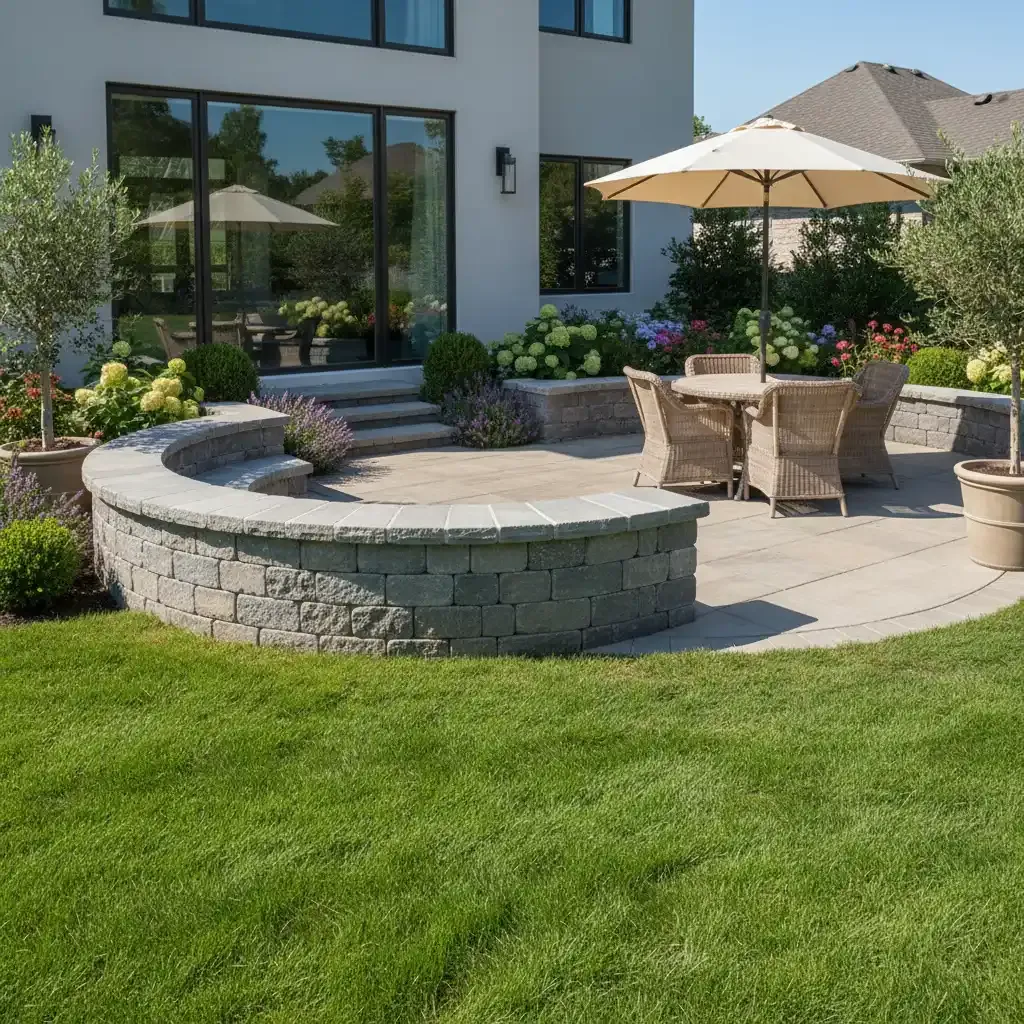
Seating Walls
Double-duty landscape features that retain soil and provide permanent outdoor seating. Reach out for a free consultation today.
Learn More →